
Moab, Utah is famous for its hiking trails, but you do not need to trek across slickrock to enjoy it. Scenic drives, accessible viewpoints, river adventures, museums and guided tours make the region one of the most rewarding destinations in the American Southwest for travelers who prefer to avoid long hikes.
This guide covers fifteen things to do in Moab without hiking. Some attractions involve short walks from a parking area, and not every surface is wheelchair accessible. If you have specific mobility needs, confirm accessibility and current conditions with the managing agency or tour operator. The suggested visit times are planning allowances, not live schedules.
Moab without hiking: quick picks
- Best national park drive: Arches.
- Best canyon panorama: Dead Horse Point or Island in the Sky.
- Best scenic river drive: UT 128.
- Best indoor activity: Moab Museum or Moab Giants.
- Best guided experience: calm-water boat tour.
Table of contents
- 1. Drive the Arches National Park scenic road
- 2. See Park Avenue and Courthouse Towers
- 3. Admire Balanced Rock
- 4. View Delicate Arch from a distance
- 5. Explore Island in the Sky in Canyonlands
- 6. Visit Dead Horse Point State Park
- 7. Drive Upper Colorado River Scenic Byway (UT 128)
- 8. Follow Potash Road (UT 279)
- 9. Take the Dead Horse Mesa Scenic Byway (UT 313)
- 10. Book a calm-water Colorado River boat tour
- 11. Join a guided 4×4 sightseeing tour
- 12. Visit Moab Giants Dinosaur Museum and Park
- 13. Discover local history at Moab Museum
- 14. Explore downtown Moab at your own pace
- 15. Enjoy sunset and stargazing from an established viewpoint
- Two-day itinerary
- Travel tips
- FAQ
1. Drive the Arches National Park scenic road
Suggested time: 2–4 hours.
Arches National Park is an excellent starting point for non-hikers. Its paved scenic road passes immense sandstone towers, balanced rocks, fins and distant arches. Stop at established pullouts, enjoy the changing views and turn around whenever your group has had enough. A short visit can concentrate on the main road and Windows area; a longer drive gives you time to explore several viewpoints.
The National Park Service says that advance timed-entry reservations are not required in 2026, although entry may be temporarily diverted during congestion. Normal entrance fees apply. Check the current rules for your travel year, arrive early if possible and never park outside marked areas. You do not need to attempt a trail to experience the landscape.
More information: visitor guide.
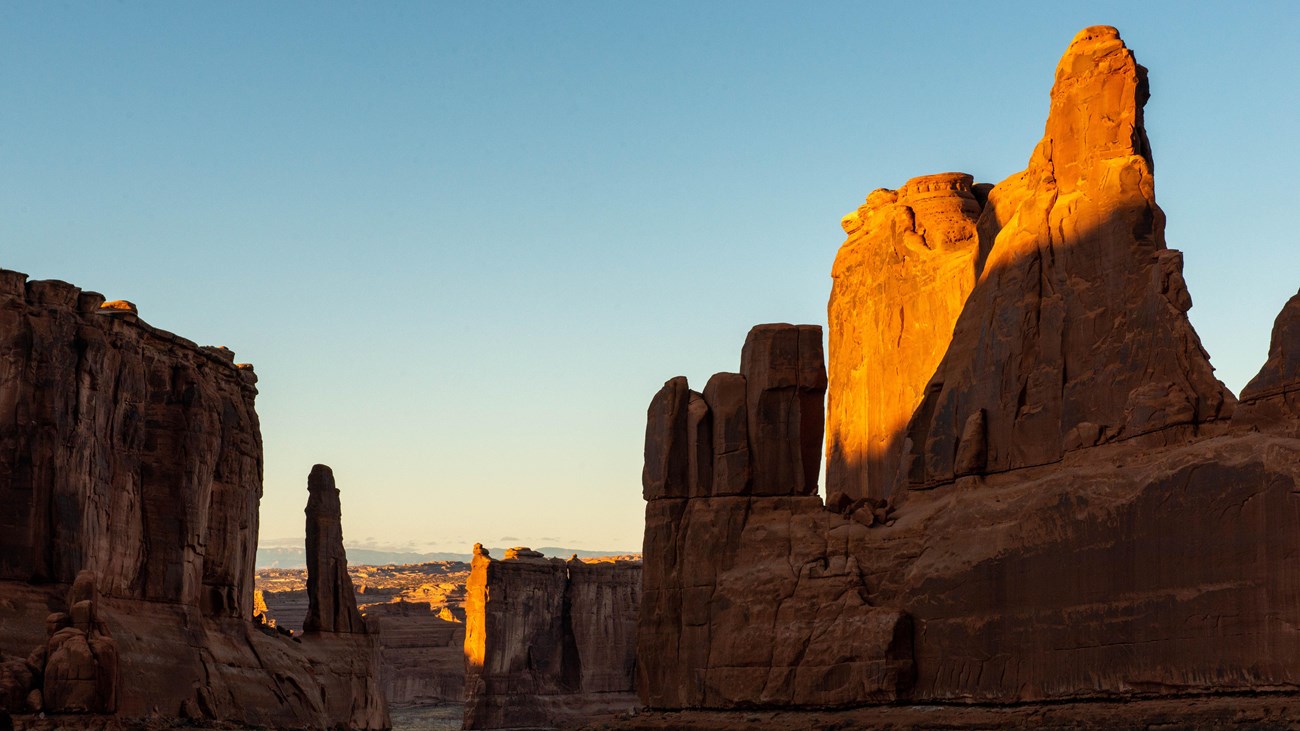
2. See Park Avenue and Courthouse Towers
Suggested time: 20–40 minutes.
Park Avenue is an impressive corridor of sandstone walls and towers near the beginning of the Arches drive. A paved path leads from the parking area to a viewpoint. You can appreciate the scene without descending the stairs into the canyon or walking the entire trail. The Courthouse Towers area offers other dramatic roadside views as you continue.
Use the viewpoint rather than following hikers downhill. If traveling with a mobility aid, check the NPS accessibility information for current surface conditions. The morning and afternoon light reveal different textures in the rock, so there is no single required time to visit. Bring water even for a short stop and use the marked viewing areas.
More information: visitor guide.
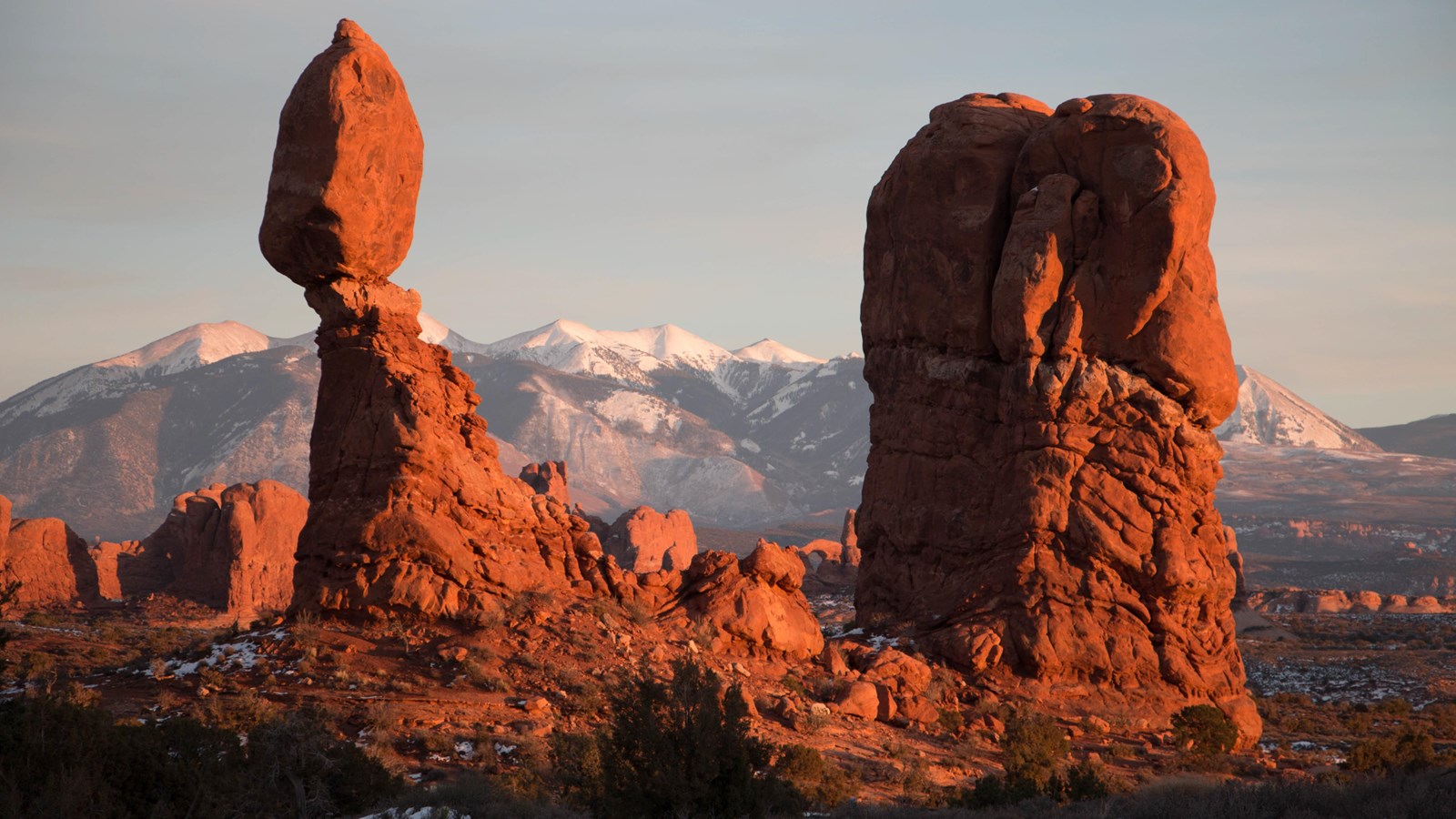
3. Admire Balanced Rock
Suggested time: 15–30 minutes.
Balanced Rock is one of the easiest recognizable landmarks to enjoy in Arches. A massive sandstone boulder appears to balance on a slender pedestal, and the formation can be seen from the park road itself. The beginning of its short viewing path is paved and level according to the park, making this a particularly useful stop for travelers who do not want a hike.
You do not need to circle the rock. Enjoy the main view, look toward the distant mountains and continue when ready. Do not climb the formation or leave established surfaces for a photo. This stop is also a good opportunity to rest and decide whether to continue to the Windows or turn back toward town.
More information: visitor guide.
4. View Delicate Arch from a distance
Suggested time: 20–40 minutes.
Delicate Arch is the famous symbol of Utah, but the strenuous walk to its base is not the only way to see it. Drive to the designated Delicate Arch Viewpoint parking area and use the lower viewing area. From there, the arch appears small on the distant skyline, so binoculars or a camera with a zoom lens are useful.
The lower viewpoint involves a short approach on a packed surface; the upper viewpoint and main Delicate Arch trail are more demanding. Do not confuse the viewpoint parking area with the main trailhead at Wolfe Ranch. If mobility is limited, check the park’s current accessibility guidance and be realistic about what the distant view looks like. It is a rewarding stop precisely because you can skip the long hike.
More information: visitor guide.
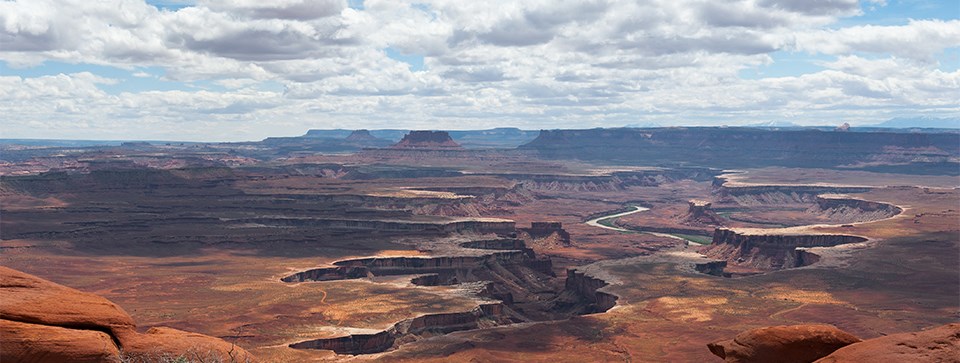
5. Explore Island in the Sky in Canyonlands
Suggested time: Half a day.
Canyonlands National Park has several districts, but Island in the Sky is the best fit for a scenic driving day from Moab. Its paved road follows a high mesa with views into immense, branching canyons. Green River Overlook, Buck Canyon Overlook and Grand View Point are especially useful stops because the National Park Service identifies accessible viewing areas at each.
Allow more time than the map suggests because the views encourage frequent stops. Bring a picnic, water and offline directions. Do not assume that the rugged Needles or Maze districts offer the same convenient experience. The Island in the Sky visitor center is a useful orientation point, and you can enjoy the main landscape without descending into any canyon.
More information: visitor guide.
6. Visit Dead Horse Point State Park

Suggested time: 1–2 hours.
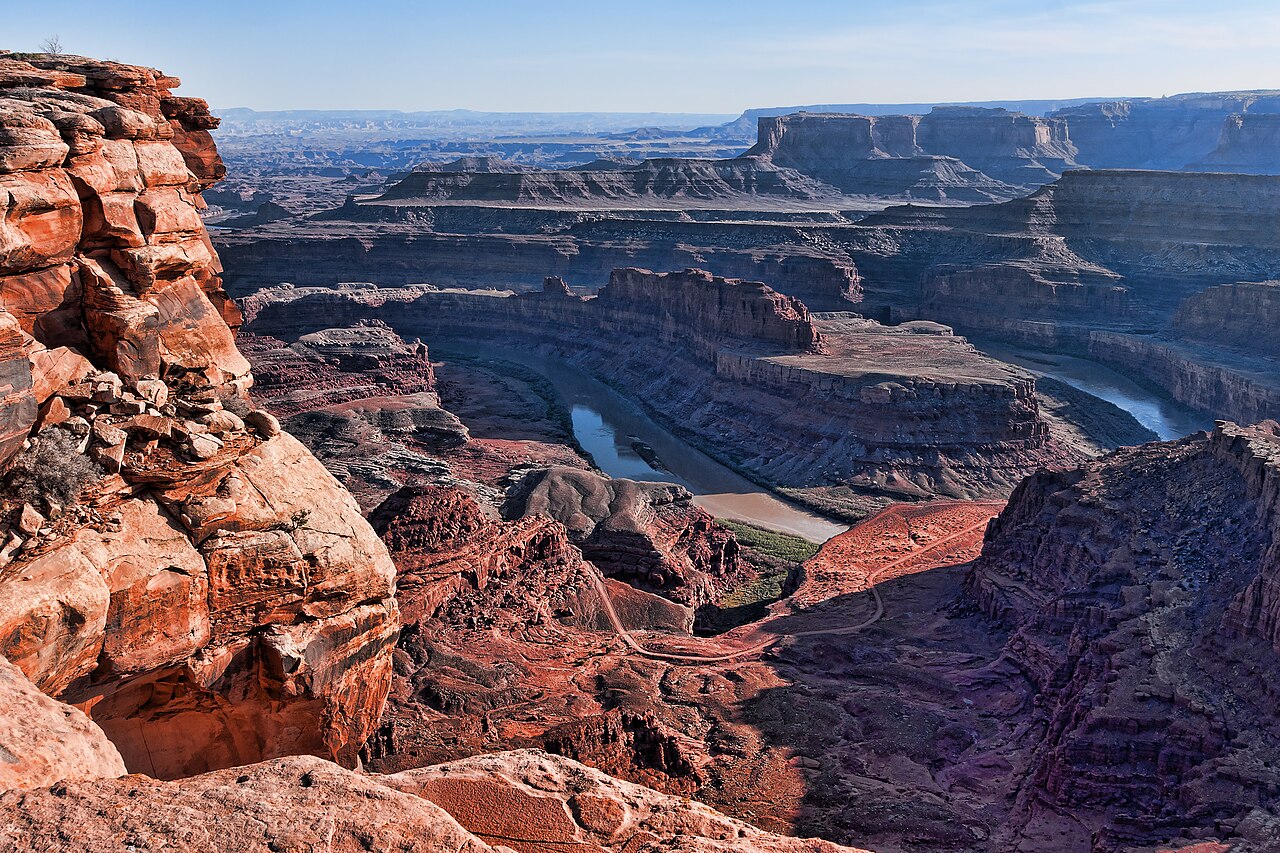
Dead Horse Point State Park offers a spectacular view of the Colorado River far below a sandstone plateau. Its main overlook is reachable by a short paved path from the parking lot; Utah State Parks identifies that approach as ADA accessible. It is a standout choice for travelers who want a memorable canyon panorama without a long hike.
The state park charges admission separately from nearby national parks. Combine it with Island in the Sky because both are reached from UT 313, but allow enough time to appreciate each destination. The main overlook path is different from the longer rim trail system, which crosses rougher surfaces. Stay within designated viewing areas and bring layers for wind at the exposed rim.
More information: visitor guide.
7. Drive Upper Colorado River Scenic Byway (UT 128)
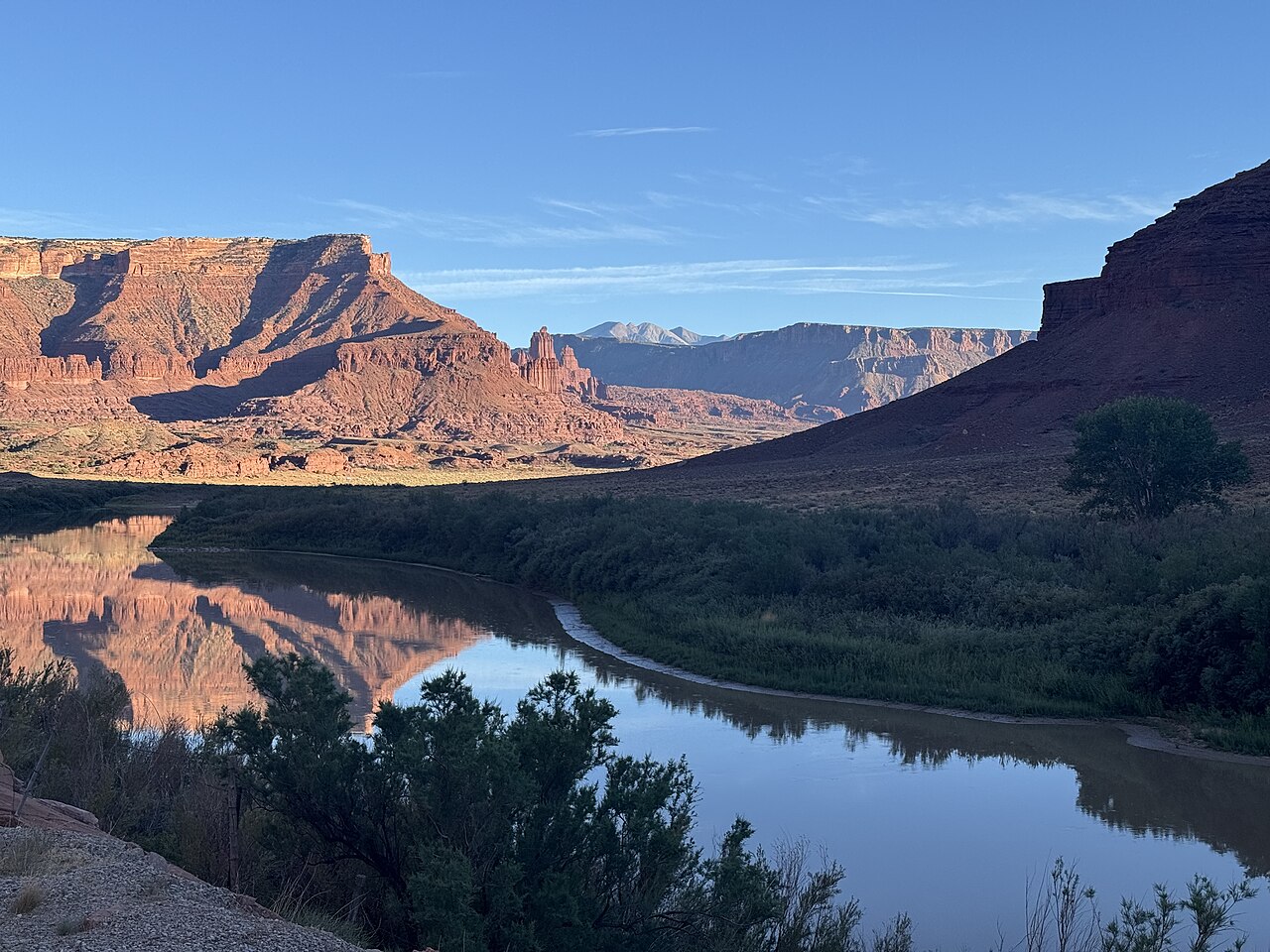

Suggested time: 2–3 hours.
UT 128, often called River Road, follows the Colorado River through a dramatic sandstone corridor northeast of Moab. It offers changing views of cliffs, river bends, ranch country and the Castle Valley landscape. You can enjoy much of the scenery from the passenger seat, stopping at legal pullouts for photographs or a quiet picnic.
There is no need to drive the entire byway if your time is limited. Pick a turnaround point that fits the daylight and your energy. Roads near the river can be affected by weather, and services are limited outside town. Never stop in a travel lane, and respect private property. This drive makes an excellent alternative to a second national park visit.
More information: visitor guide.
8. Follow Potash Road (UT 279)
Suggested time: 1–2 hours.
Potash Road follows a different stretch of the Colorado River southwest of Moab, beneath tall sandstone cliffs. The paved section offers views of the river, the famous Wall Street climbing area and roadside rock art. It is a compact scenic drive that can be combined with a relaxed afternoon in town.
Do not continue onto unpaved backcountry roads simply because a navigation app suggests a loop. The route toward Shafer Trail is a very different driving proposition. Use marked pullouts when stopping near rock art, never touch or trace the markings, and remember that some dinosaur track viewpoints require walking on irregular surfaces. If a site cannot be seen safely from your chosen stop, enjoy the roadside scenery instead.
More information: visitor guide.
9. Take the Dead Horse Mesa Scenic Byway (UT 313)
Suggested time: 1–2 hours plus park stops.
UT 313 is more than a road connecting attractions. As it climbs through canyon country west of Moab, the views shift from low desert to open plateau landscapes. It links the approaches to Dead Horse Point and Canyonlands, making it an efficient route for a day centered on scenic drives.
Build time into your schedule for the drive itself. Stop only at safe, established places and avoid narrow roadside shoulders. Fuel up in town and check weather before leaving, particularly when winter conditions affect higher elevations. If you have only one day, focus on either the state park or Canyonlands and enjoy this road along the way rather than squeezing in both.
More information: visitor guide.
10. Book a calm-water Colorado River boat tour
Suggested time: Half a day.
A guided boat excursion offers canyon views from below instead of from the rim. Calm-water jetboat tours are one option for travelers who prefer scenery to whitewater rafting. The river corridor provides a perspective that is hard to replicate from the highway, particularly when cliffs rise above both banks.
Ask operators about boarding arrangements, seating, shade, minimum age requirements and suitability for your mobility or medical needs. A calm-water tour is not identical to a rafting trip, and no river outing is free of risk. Water levels, weather and seasonal operations affect availability. Follow the guide’s safety instructions and wear required flotation equipment.
More information: visitor guide.
11. Join a guided 4×4 sightseeing tour
Suggested time: Half a day.
A guided off-road tour can take you into red-rock country without requiring long walks. Local operators offer different styles of trips, from scenic routes to more technical experiences. Choose a gentle sightseeing itinerary if the goal is photography and comfort rather than a thrilling ride over steep obstacles.
Discuss your needs with the operator before booking. Some tours involve rough rides, high steps, exposed terrain or getting in and out of a vehicle several times. They may not suit everyone with back or neck problems, pregnancy or limited mobility. Never assume a rental SUV is authorized or equipped for a technical trail. Choose an experienced operator and confirm the route, permits and cancellation conditions.
More information: visitor guide.
12. Visit Moab Giants Dinosaur Museum and Park
Suggested time: 2–3 hours.
Moab Giants is a family-friendly way to explore the region’s prehistoric history. The attraction near US 191 and UT 313 includes indoor dinosaur exhibits and an outdoor route with life-sized models. If your group wants to avoid longer walks, focus on indoor attractions or ask staff which outdoor sections are appropriate.
The attraction has a separate ticket and opening hours that vary seasonally. Its November 2026 schedule differs from its October schedule, so check the current visitor page before driving there. Ask about accessibility and sensory considerations for immersive attractions. It pairs well with a morning visit to Dead Horse Point or Canyonlands, provided your group has the energy for both.
More information: visitor guide.
13. Discover local history at Moab Museum
Suggested time: 45–90 minutes.
A museum visit gives your trip a deeper connection to the communities behind the scenery. Moab Museum in downtown Moab explores regional history, Indigenous histories and the people who shaped the area. It is a welcome change of pace on a hot afternoon or a day when wind makes outdoor viewpoints less pleasant.
Check the current exhibition schedule and opening hours directly with the museum. Take time to read the interpretation rather than treating the visit as a quick photo stop. Downtown restaurants and shops make it easy to combine this activity with a meal, and you can return to your accommodation without another long drive.
More information: visitor guide.
14. Explore downtown Moab at your own pace
Suggested time: 1–2 hours.
Moab’s downtown offers an easygoing alternative to outdoor recreation. Browse local shops, enjoy a meal, look for locally made artwork and plan the next day’s outing. A relaxed morning in town can be particularly welcome after two days of driving and early starts. You do not have to schedule a tour every day to experience the destination.
Choose a convenient parking spot and explore only as much as your group wants. Check individual business hours, which may vary with the season. If walking is difficult, plan a few specific stops rather than a long stroll. This is also a good time to restock water, snacks and supplies before visiting the parks again.
More information: visitor guide.
15. Enjoy sunset and stargazing from an established viewpoint
Suggested time: 30–90 minutes.
Moab’s open desert skies are an attraction in themselves. A sunset at an established viewpoint can reveal changing colors across the sandstone, while clear nights may offer excellent stargazing. You can enjoy either activity without a hiking itinerary. Choose a legally accessible location with safe parking and a clear view.
Inspect the location in daylight, stay well back from cliff edges and bring warm clothing and a flashlight. Check cloud cover, moon phase and any after-dark access restrictions. Do not walk into unknown canyon terrain at night. A paved viewpoint such as Panorama Point in Arches may suit some visitors; check park conditions and access first.
More information: visitor guide.
Two days in Moab without long hikes
Day one: Visit Arches early, stopping at Park Avenue, Balanced Rock and the Delicate Arch viewpoint. Return to Moab for lunch, then explore downtown or visit the museum. If you have enough daylight, enjoy a short drive along UT 128. Keep the evening flexible.
Day two: Follow UT 313 to Island in the Sky and Dead Horse Point. Choose a few accessible overlooks and allow time for a picnic. If you prefer a guided experience, replace one park with a river tour. With a third day, add Moab Giants or Potash Road.
Practical planning tips
Spring and fall generally offer more comfortable temperatures, but weather can change quickly. Summer heat makes even a short walk demanding, while winter snow and ice can affect scenic roads. Carry extra water, dress in layers and download offline maps. Check separate entrance fees for each national and state park, and remember that a federal pass does not cover all attractions.
If you need step-free access, check the official park accessibility pages and ask tour operators about boarding. A short trail is not necessarily accessible. Avoid off-road shortcuts, stay on marked paths and protect fragile biological soil crust and rock art.
Planning a wider Southwest trip? Read our Page, Arizona guide and Las Vegas to Zion road trip guide.
Frequently asked questions
Is Moab worth visiting without hiking? Yes. Its scenic roads, canyon overlooks, museums and guided river trips offer a wide variety of experiences.
Can you see Arches from your car? Many formations are visible along the paved scenic road. Some arches are best viewed from short designated paths.
Which Canyonlands district is easiest for non-hikers? Island in the Sky, with its paved scenic road and several accessible overlooks.
Do I need timed entry for Arches in 2026? No advance timed-entry reservation is required in 2026, according to the NPS. Check current rules for later years and possible congestion restrictions.
How many days should I spend in Moab? Two or three days allow a comfortable mix of scenic drives, overlooks and town activities.
Final thoughts
Moab rewards travelers who slow down. Choose a few scenic drives, stop at viewpoints that match your abilities and leave room for rest. You can come away with an unforgettable experience of Utah’s red-rock country without completing a single long hike.
Sources and photo credits
- NPS — Arches viewpoints
- NPS — Island in the Sky
- Utah State Parks — Dead Horse Point
- Discover Moab — scenic byways
- Featured photograph: NPS/Chris Wonderly, Balanced Rock, public domain.
Research reviewed November 18, 2026. This is a researched guide, not a claim of firsthand travel.
Leave a Reply